Snow at Hallam Lake, 10/12/2025. Phebe Meyers
RFV Phenology: First Snowfall in Aspen!
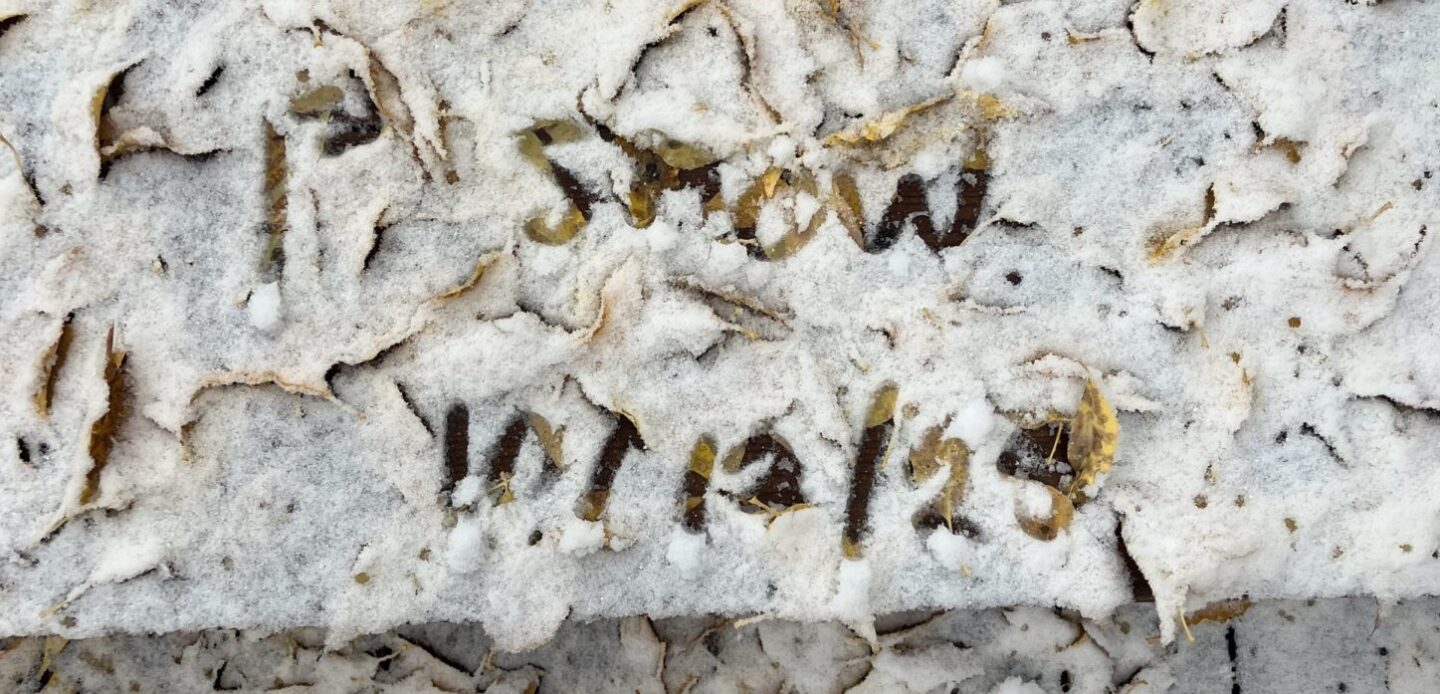
Sunday, October 12th, marked the first snowfall in Aspen, according to ACES snowpool rules. Since 2007, when ACES began keeping track, the first snow in town has been as early as September 9th (2020) and as late as November 4th (2015 and 2024). This year’s October 12th snow is smack-dab in the middle, falling just three days before the 10 year average.
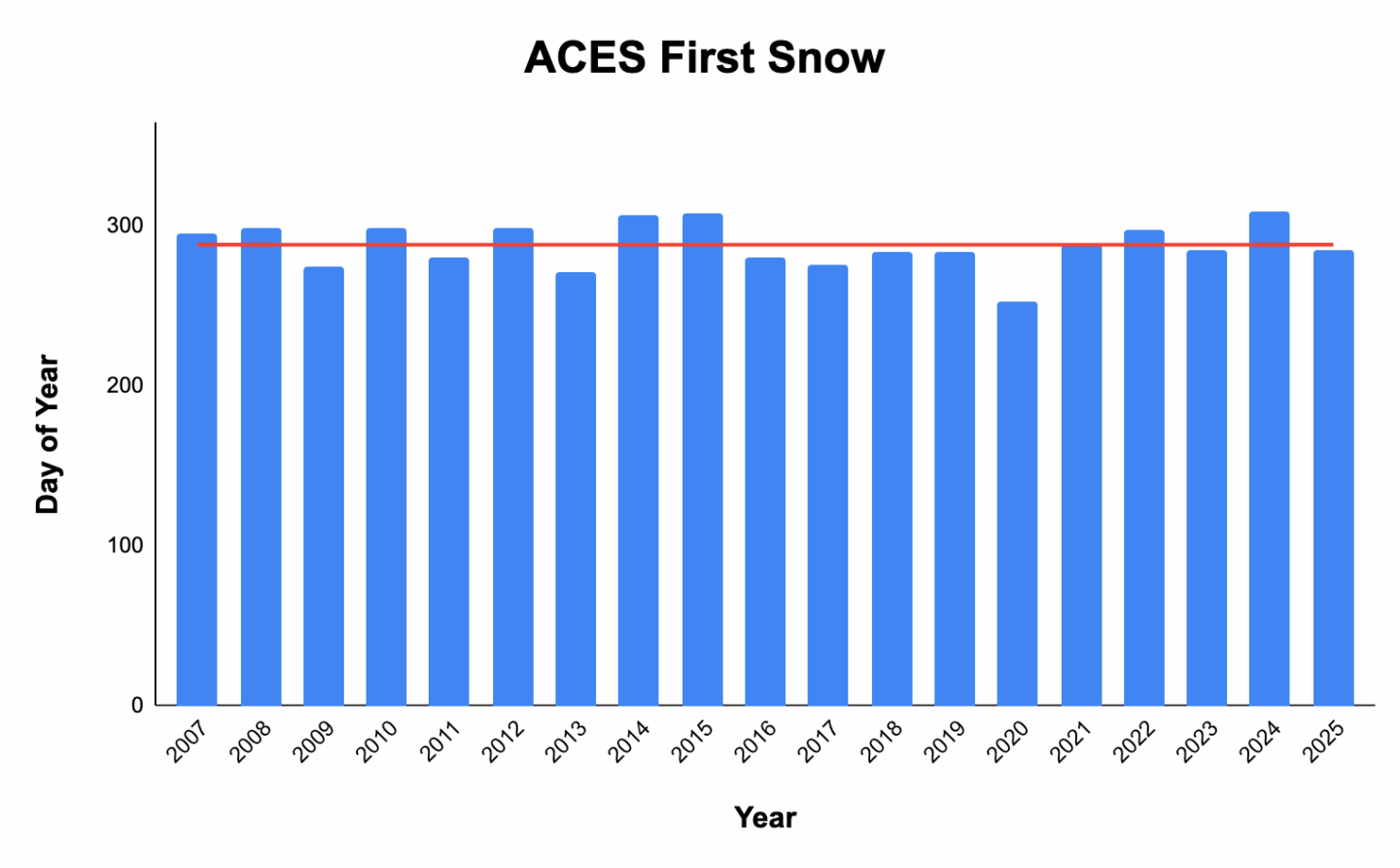
Day of first snowfall at Hallam Lake between 2007 and 2025. The red line indicates October 15th (the 288th day of the year), the average day of the first snow. Blue columns that extend above the line indicate years when the first snow was later than average, and blue columns that don’t reach the red line indicate years when the first snow was earlier than average.
Date of First Snow Since 2007:
Oct. 22, 2007
Oct. 24, 2008
Oct. 1, 2009
Oct. 25, 2010
Oct. 7, 2011
Oct. 25, 2012
Sept. 28, 2013
Nov. 3, 2014
Nov. 4, 2015
Oct. 6, 2016
Oct. 2, 2017
Oct. 11, 2018
Oct. 10, 2019
Sept. 9, 2020
Oct. 15, 2021
Oct. 24, 2022
Oct. 12, 2023
Nov. 4, 2024
Oct. 12, 2025
In order to count as the ACES official first snow, interlocking snowflakes must cover an area the size of an XL pizza box (about two square feet) on the ACES back porch wrap-around bench. The designated area on the porch gets checked for snow at 8:30am (for example, even though today’s snow melted by noon, it counted because there was snow at 8:30am). These guidelines have been developed by the ACES Naturalist Staff over the years, with the goal of standardizing the first snow data we’re taking year after year.
But why do the rules need to be so specific? It’s not just to make the first snow bets placed by ACES staff as fair as possible, but rather for the sake of sound science! Researchers across the globe are studying the effect of climate change on seasonal weather patterns and animal and plant phenology (periodic events important in biological life cycles). In order to collect data with as much precision as possible, they must create guidelines for weather and life-cycle events as strict as the ACES first snow rules, if not stricter. These guidelines aim to pinpoint exactly when life-cycle events, like bud burst or emergence from hibernation, occur.
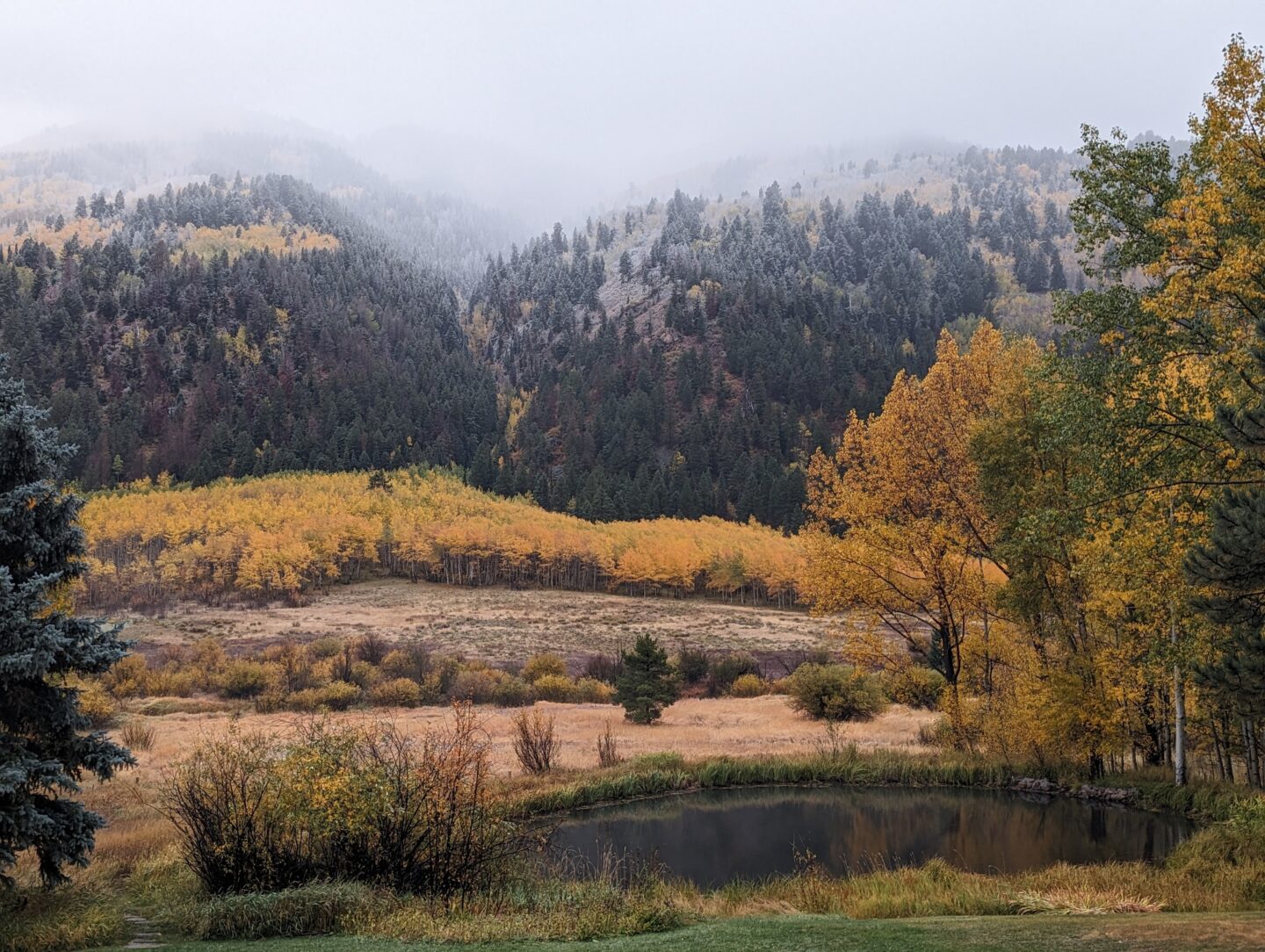
North Star Nature Preserve, 10/3/2023. Jim Kravitz
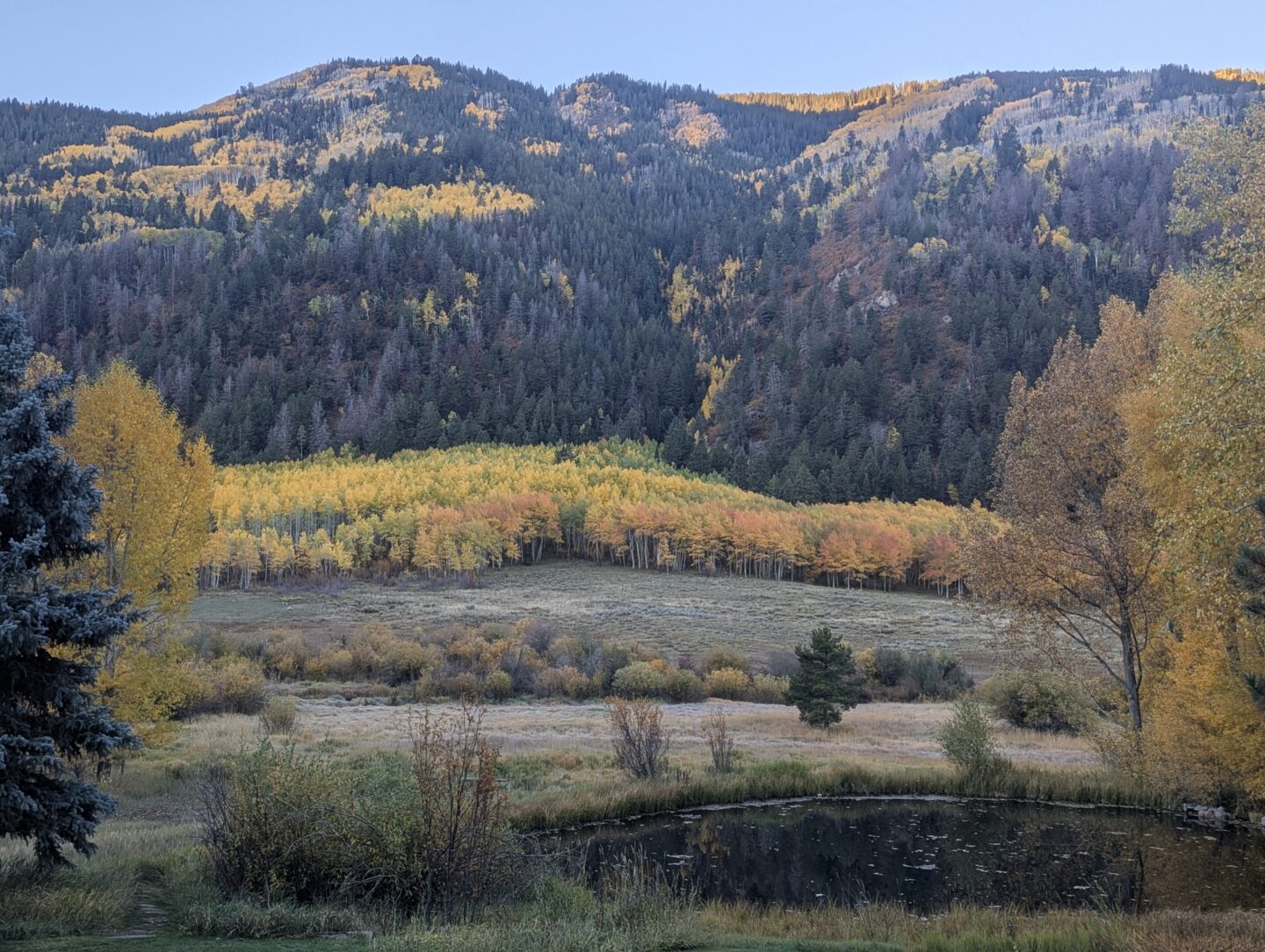
North Star Nature Preserve, 10/3/2025. Jim Kravitz
Check out these photos from October 3rd, 2023 (left) and 2025 (right), which show how leaf color and snowfall can vary from year to year. In 2023, the aspen leaves seem to be a deeper golden color, and snow had already fallen higher up the hill. Repeat photography like this is another way to track phenology, allowing for comparisons of weather and seasonal change at the same location and on the same date, but across different years.
Through these studies of phenology, we are able to learn more about how climate change is affecting the natural world. Tracking the first snow year after year may not reveal much about these global changes, as the date of first snow is always variable and thus doesn’t directly inform many biological processes. However, annual data like peak runoff, total precipitation, and date of complete snowmelt can all influence when migratory species return, hibernators rouse, and flowers bloom. As the climate gets warmer and drier, we’re expecting to see these key spring events pushed earlier, the effects of which are still being studied.
Keep an eye out for more stories of the changes happening as winter sets in! When do you think the first big snow will be?
~ Lydia Loof, ACES Naturalist