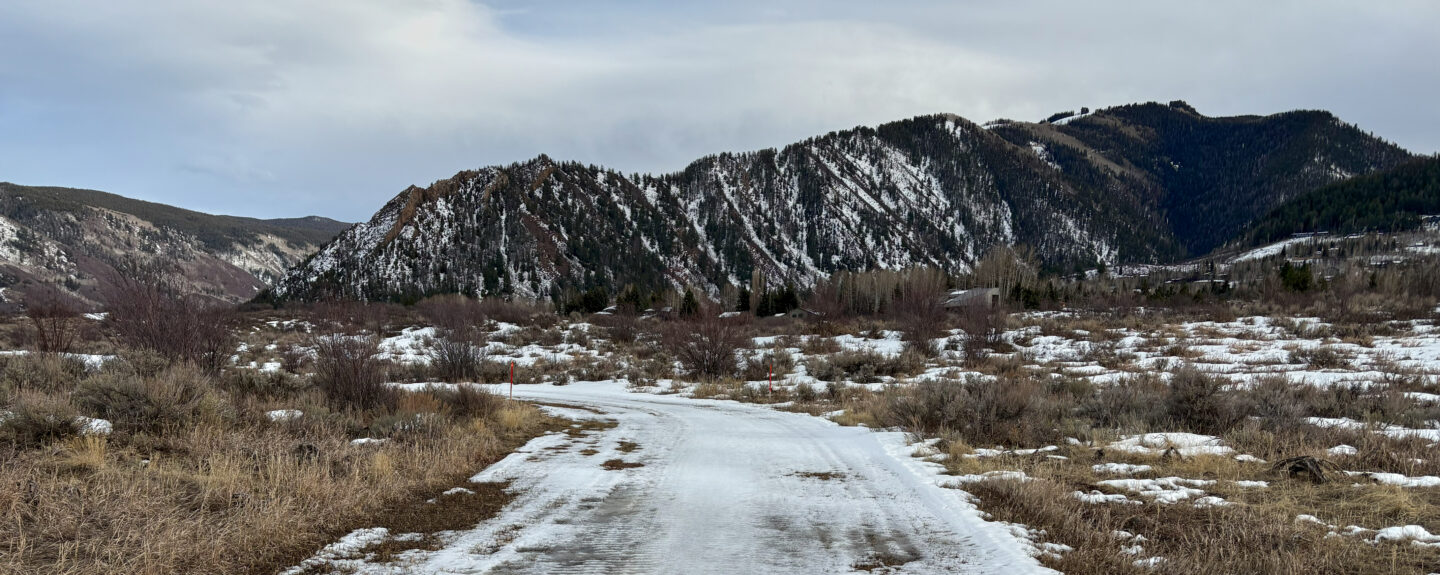
Without the use of any fancy sensors or historical records, we can say with high confidence that it’s been a hot and dry winter. Unless you’ve been skiing Aspen since 1977, this is the driest winter you’ve ever experienced. Fortunately, while we don’t need fancy sensors and data to tell us it’s hot and dry out there, we can still make good use of our government-funded science to dig into how hot and dry it is relative to past winters, what our experience this winter means for future winters in the Roaring Fork Watershed, and what is possible for the rest of this winter. But first, a little info on how we’ll be answering these questions.
The Winter We Have (Not the One We Wanted)
About Our Data
We’ll be using the Gridmet dataset, which is daily weather data extending back to 1979. Gridmet is produced by a team of scientists at the University of California Merced, and their work is funded by the National Science Foundation (a program of the federal government). While it’s amazing to have this data freely available for our community use, it serves many other functions, from weather prediction to infrastructure planning. The United States is somewhat unique in that all of the climate, weather, and satellite data produced (outside of military applications) is freely available to anyone. The availability of this data helps support small businesses, local communities, and scientific work. Unfortunately, this system is under threat. Our current administration has tried (sometimes successfully, sometimes not) to cut funding to both NOAA and NSF. These programs are crucial to understanding our world and helping our society function.
How Bad Is It?
To understand the severity, we analyzed the period from November 1st to May 31st. We selected this period as the time when mountains in the Roaring Fork Watershed are typically receiving snow. While snowpack is almost always declining in May (with a few notable exceptions), a wetter and colder May can significantly slow down that decline and prolong the period in which snowmelt is feeding local ecosystems and rivers.
We’re not going to sugarcoat it; it’s pretty bad. We currently have the dubious distinction of being in the hottest and driest winter dating back to the start of our Gridmet dataset in 1979. The two years that come closest to this year are 2018 and 1981.
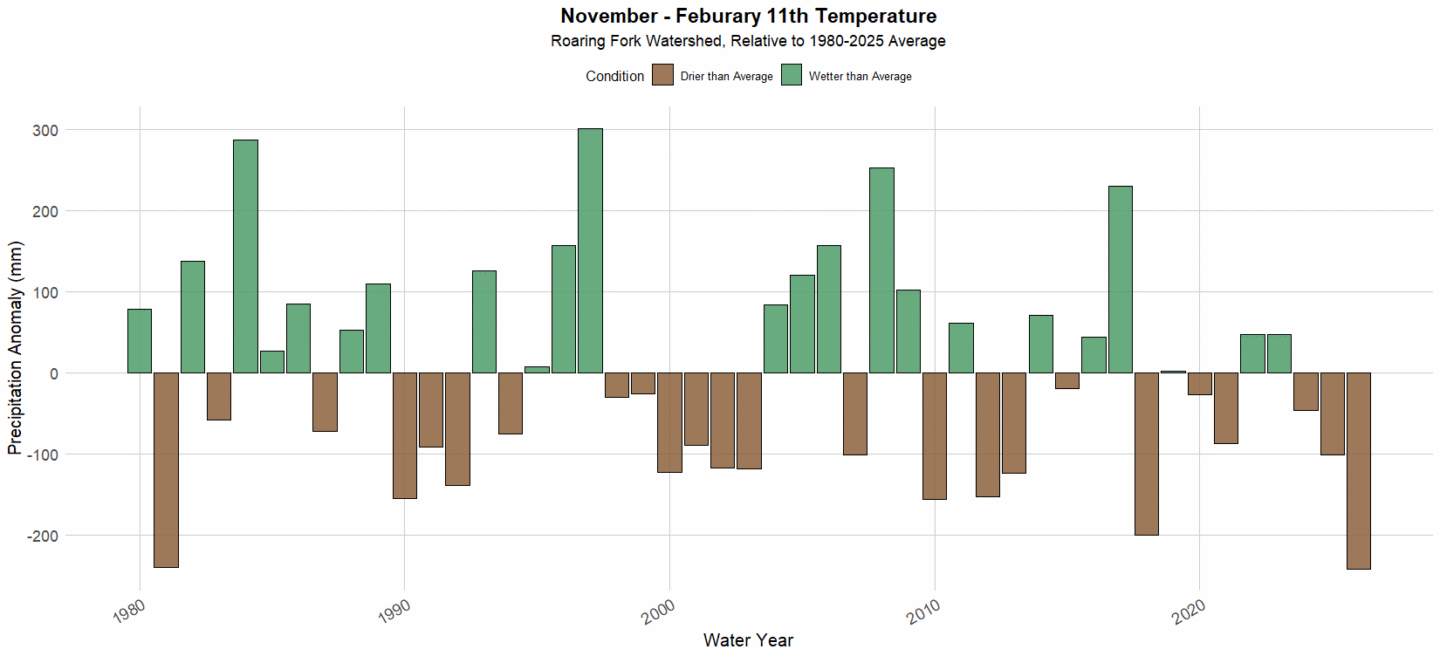
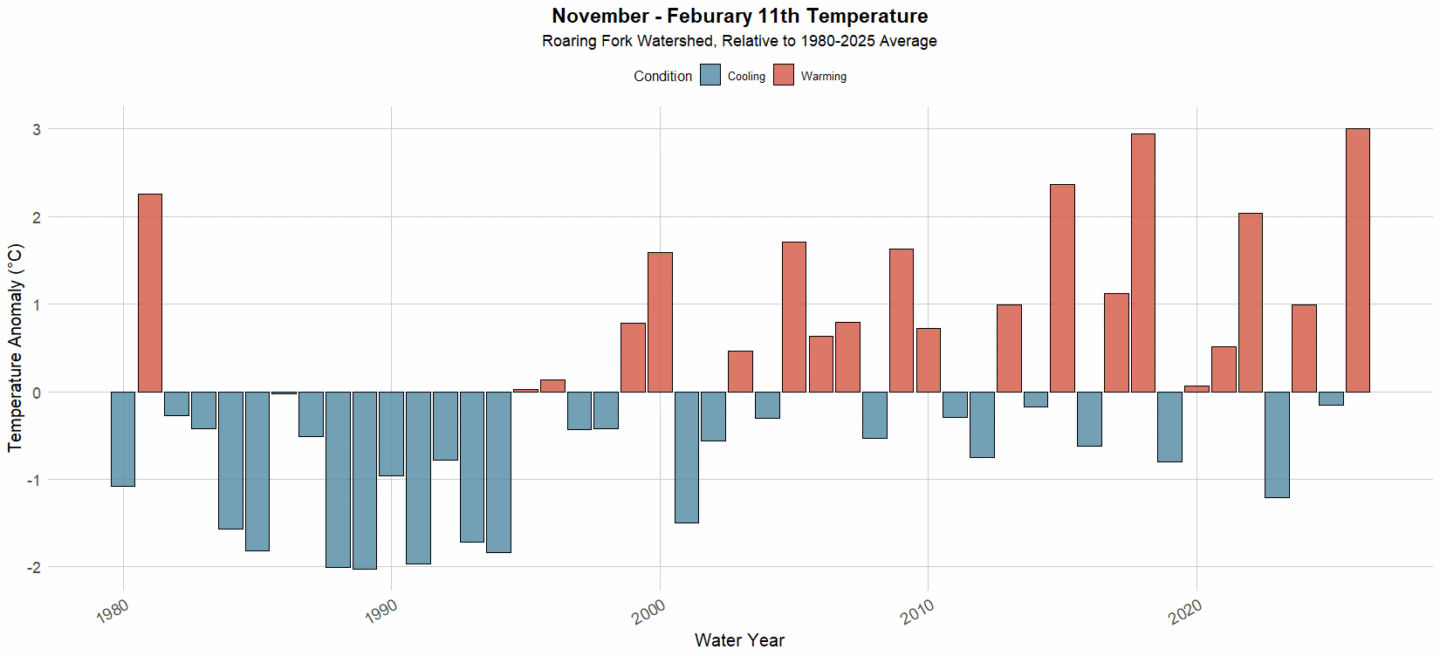
What’s different about these two years is that 1981 was an anomaly—it was at the start of a decade with cooler temps and mostly above-average precipitation. On the other hand, 2018 and 2026 are both part of consistently hotter-than-average winters and, more recently, drier starts to the season.
While precipitation data shows a downward trend, it isn’t what would be considered statistically significant. In other words, the downward trend we’re seeing is likely due to random variability rather than a significant trend. The downward trend on temperature, on the other hand, is statistically significant.
While the lack of snow is certainly the most noticeable thing this winter, the story is really the temperature. Precipitation is extremely variable; good years and bad years happen, but over the period of record we’re examining, this type of year isn’t unexpected. Furthermore, the recent downturn of early winter precip over the past three years is also not unexpected. So, going forward, is this precipitation deficit our future? Probably not.
The story of temperature, on the other hand, isn’t nearly as sanguine. The hot winter we’ve experienced this year is likely a taste of what’s to come. That means more rain events for the lower elevations of our watershed, more midwinter melting, a slower start to the ski season with less snow in November, and more limited snowmaking. That isn’t to say that we’re done with cold winters, but they are becoming an endangered species.
So You’re Telling Me There’s a Chance!
In our 47-year record, there is only a single year that had enough precipitation to dig us out of the hole we’re currently in. In 1995, from this point in February until the end of May, there were 22 inches of precipitation; that’s about double the average precipitation that normally falls over that period.
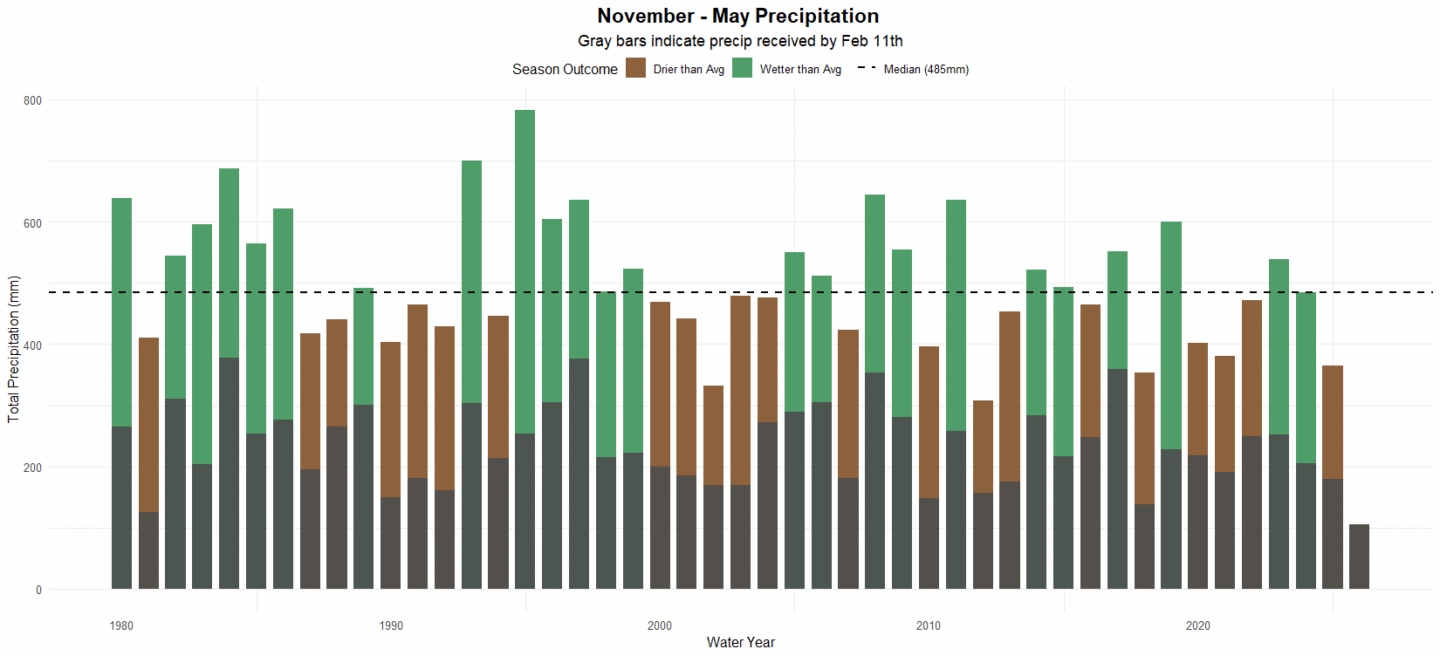
Based on a model of total precipitation for this period, we have a roughly 1% chance of ending the year with a normal amount of precipitation. If we were to receive the median amount of precipitation between now and the end of May, we would end up with the same amount of precipitation which fell from November to May in 2025. Last year and this year would be tied as the years with the fourth-lowest precipitation. “Fourth worst” isn’t exactly a lofty goal, but it would be a lot better than 2002, 2012, or 2018, all of which were significant fire years in Colorado.