How Beavers Help Restore Mountain Ecosystems
ACES Team
November 12, 2026
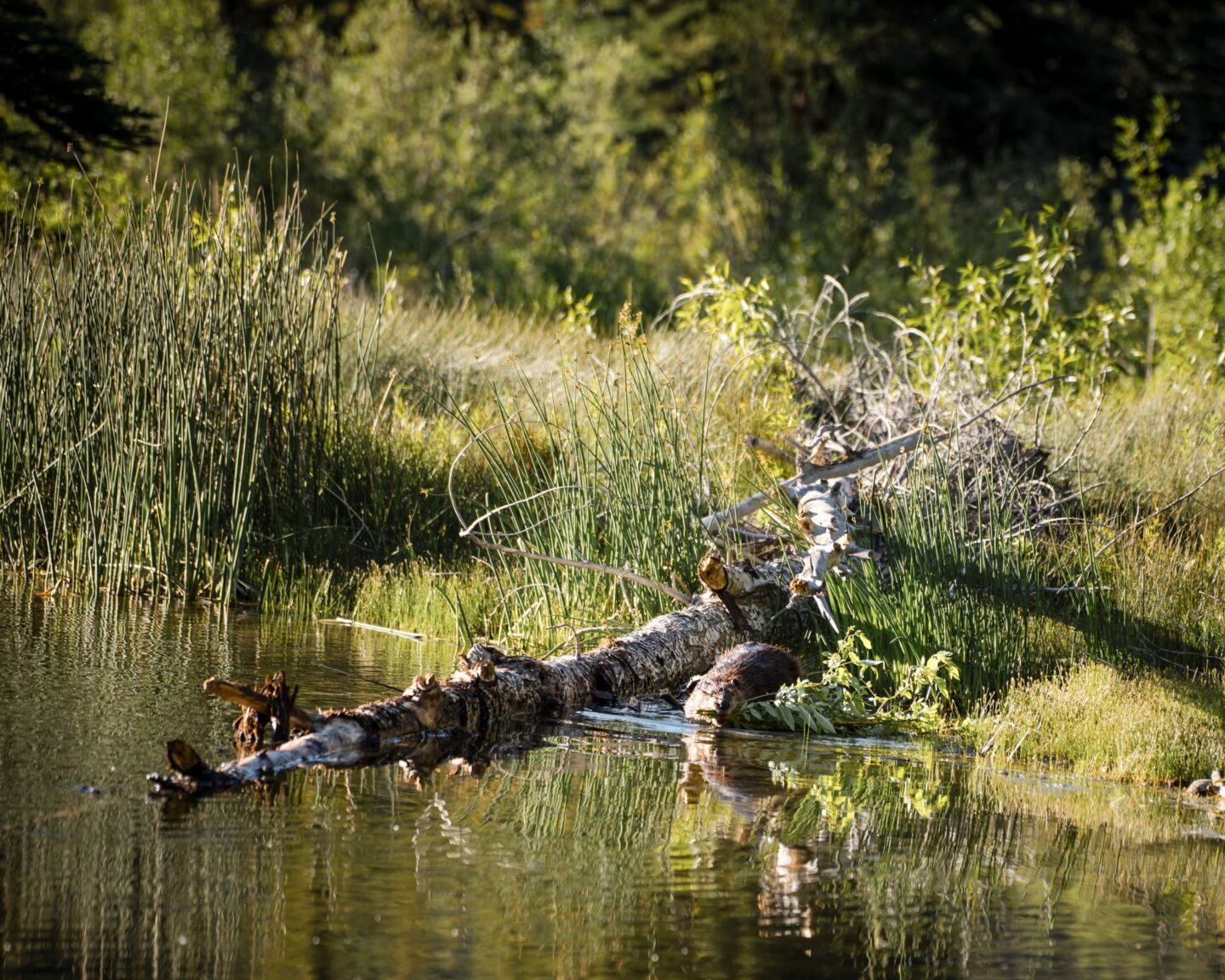
Dusk at Hallam Lake – the swallows have quieted, the water goes still, and then a dark head cuts a V across the surface, towing a leafy branch. That’s ACES’ resident beaver family at work. So how do beavers help the ecosystem? Colorado Parks and Wildlife calls the beaver a keystone species in riparian communities, meaning the ecosystem would change dramatically without them, and says no mammal other than humans has as great an influence on its surroundings.
How Do Beavers Help the Ecosystem?
Beavers build dams that slow streams and spread water into ponds and wetlands. Those wetlands store water through dry spells, feed willows and songbirds, shelter fish and other wildlife, and stay green during wildfire. That is why ecologists call beavers ecosystem engineers.
What Is an Ecosystem Engineer?
An ecosystem engineer is an animal that physically builds or reshapes habitat for everything around it. Beavers are the textbook case. A single dam backs up a pond, raises the water table and turns a narrow channel into a broad wet meadow. Many mountain ponds, willow thickets and meadows across Colorado are the work of beavers over time.
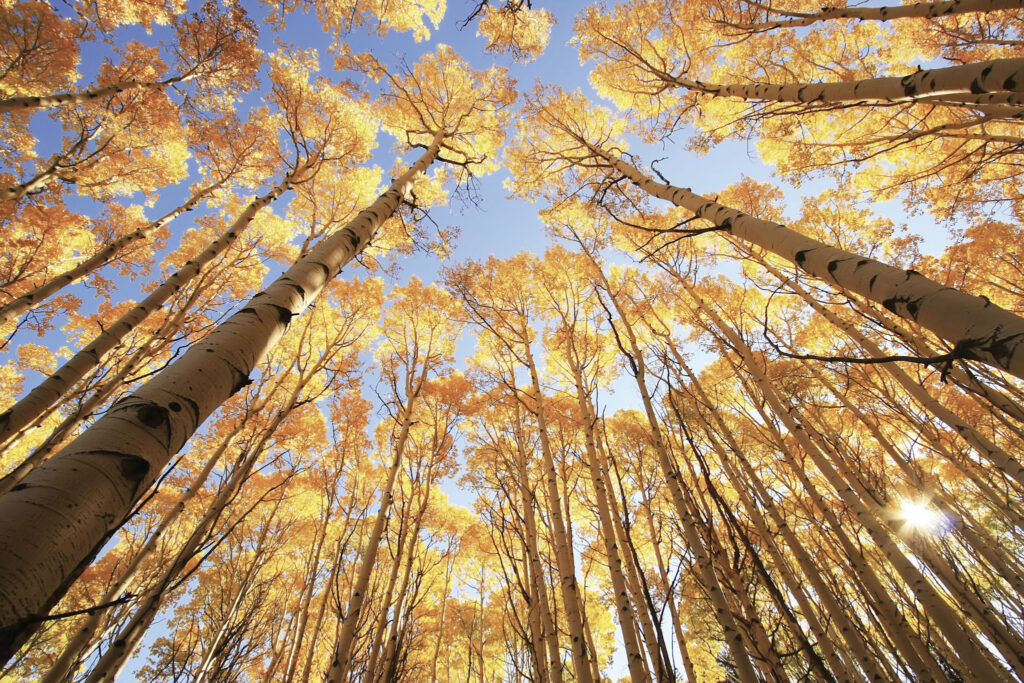
Those changes reach well beyond the pond. Beavers and aspens are closely tied, which is one more reason aspen trees matter to Colorado mountain ecosystems. The US Forest Service notes that beavers cut aspen for food and dam material, that cutting stimulates new aspen sprouts, and that flooding behind dams can change an entire plant community.
Water: Slowing, Storing and Holding It on the Land
A beaver pond works like a sponge. Water that would rush downstream in spring stays on the land longer, soaking into soil and feeding plants through dry months. Ecologist Delia Malone told Aspen Public Radio that losing beavers means losing the wetlands and water storage they create, and that beaver dams store large amounts of carbon, which is released when abandoned dams dry out.
How much water are we talking about? A UC Berkeley-led modeling study estimated that beavers in California’s Sierra Nevada could store nearly 120 million cubic meters of water, enough to fill about 48,000 Olympic swimming pools. That’s a California model, not a Colorado measurement, but it shows the scale.
Wetlands That Feed and Shelter Wildlife
Wetlands cover only about 2 percent of Colorado’s land area, yet about 75 percent of the state’s species depend on them for some part of their life cycle. Beavers build and maintain a lot of that habitat. A 2018 survey by Colorado Wildlife Science found that where beavers return to suitable places, willows grow faster, there’s more food for other wildlife and there are more songbirds.
Hallam Lake shows it in miniature. Fish, beavers and muskrats find refuge in its water. Swallows arrive by the thousands in summer to eat insects hatching off the surface, and migrating waterfowl rest on its ice-free water. For more on what to see there through the colder months, read our guide to wildlife watching in Aspen.
Fire and Drought Resilience
Wet ground doesn’t burn well. Research published by the Geological Society of America looked at three major 2020 wildfires in Colorado and Wyoming and found that about 90 percent of beaver-dammed riverscapes qualified as fire refugia, compared with about 60 percent of riverscapes without dams. Those green strips give plants and animals a refuge during a fire and help the land recover afterward.
The Hallam Lake Beavers: A Local Story
There has been an active beaver lodge on Hallam Lake for more than 40 years, and beavers have likely lived in the area almost continuously for several thousand years. The family relied on a steady lake level for underwater access to their bank lodge beneath spruce trees on the west side, plus a deep pool for the winter food cache.
Then the lake had to be drained. In 2021, ACES began the Hallam Lake Habitat Improvement and Berm Repair project to fix a failing earthen berm and add deeper water and new wetlands. Live-trapping a family of three to eight beavers, then finding suitable legal habitat to release them, would have been difficult, so ACES chose to let them relocate on their own. Here’s how it unfolded, as told by Jim Kravitz in What About the Beavers?:
| When | What happened |
| 1880s | Miners build the first embankment, impounding springs to create Hallam Lake |
| 1968 | Elizabeth Paepcke donates the Hallam Lake property to ACES |
| Fall 2021 | The lake is drained; beavers stop damming a side channel and old channels near the Roaring Fork fill with water |
| October to December 2021 | A new food cache of willow stems grows beside 48-degree spring water that keeps it ice-free |
| Late fall 2021 | The family moves into hollows beneath tree roots behind the wetland platform, with underwater entrances and connected channels |
| Early 2022 | The lake refills, and within a week beaver tracks lead from the new wetlands back into the lake |
| Today | Sunset Beaver Walks still look for the resident beaver family at dusk |
Instead of waiting out the disruption, the beavers engineered a new home before winter set in.
Bringing Beavers Back Across Colorado
Colorado Parks and Wildlife’s Beaver Conservation and Management Strategy sets out to increase and sustain beavers and beaver-influenced wetlands in suitable habitat across the state.
Restoration is already underway elsewhere on the Western Slope. At West Rifle Creek State Wildlife Area, CPW staff built two beaver dam analogs, human-made structures that mimic beaver dams, in August 2024 about a mile downstream of an existing colony. Crews added 39 more by spring 2026. About 33 miles away, at Garfield Creek State Wildlife Area near New Castle, wildlife officers released seven beavers into new habitat on June 5, 2026. Colorado Outdoors has the full story.
Living With Beavers
Beavers can cause real headaches, from felled ornamental trees to flooding behind their dams. CPW’s beaver page outlines nonlethal fixes such as wrapping individual trees in fencing, using electric fencing around culverts and installing special pipes and grates to manage dam flooding. It’s also illegal for private individuals to release live-caught beavers on public land. Start with CPW’s guidance and your local office before acting.
See Beavers at Hallam Lake
The best way to understand beavers is to watch them work. ACES’ Sunset Beaver Walks are a guided walk around the Hallam Lake nature preserve at dusk, the perfect time to spot ACES’ resident beaver family and other wildlife. You’ll learn all about this incredible species and the valuable role beavers play in wetland ecosystems. Walks run on summer evenings from 7:30 to 8:30pm, and registration is required. They’re free for ACES members and $10 per family for non-members. This summer’s walks have wrapped, so watch the ACES calendar for next season’s dates.
Make an evening of it. Pair a walk with the summer Birds of Prey Demonstration, which introduces ACES’ resident raptors, or with a Know Your Trees walk to learn the willows and aspens beavers depend on. And if you plan to come more than once, an ACES membership makes every beaver walk free. Levels start at $25 for ages 18 to 30 and $50 for the Red-tailed Hawk level.
Frequently Asked Questions
Do beavers help the environment? Yes. Their dams slow streams and spread water into ponds and wetlands that store water through dry spells and shelter fish, songbirds and other wildlife. Those wetlands also tend to stay green during wildfire, giving plants and animals a place to ride it out.
Why are beavers called a keystone species? Colorado Parks and Wildlife says riparian ecosystems would change dramatically without them. CPW also notes that no mammal other than humans has as great an influence on its surroundings. One dam can raise the water table and turn a narrow channel into a broad wet meadow.
What are beaver dam analogs? They’re human-built structures that mimic natural beaver dams to slow water, raise water tables and restore streams. They can also make a stretch of creek more inviting for beavers to settle in on their own. At West Rifle Creek State Wildlife Area, Colorado Parks and Wildlife crews built 39 of them by spring 2026.
Where can I see beavers near Aspen? The best bet is a Sunset Beaver Walk at ACES’ Hallam Lake nature preserve, where naturalists head out at dusk to look for the resident beaver family. Walks run on summer evenings and are free for ACES members. Outside of summer, you can still walk the preserve’s half-mile loop year-round and look for fresh-cut stems and other beaver signs.
Related Content
Wildlife Watching in Aspen: A Fall and Winter Guide Beyond the Birds
Learn More
Winter Retreats in Aspen: Gather in the Snowy Castle Creek Valley at Toklat
Learn More