Top Environmental Education Organizations in Colorado
ACES Team
October 26, 2026
More than a third of Colorado is federal public land, roughly 24 million acres. The state has four national parks, dozens of wilderness areas, and a growing population of people who moved here for the mountains and want their kids to grow up knowing them. What it does not have is a single obvious answer to a question a lot of families, donors, and teachers are asking right now: where do you go to actually learn this landscape?
Environmental literacy is not memorizing the water cycle. It is a kid who notices the creek is lower than last week and asks why. It is an adult who can tell a Cooper’s Hawk from a Sharp-shinned in the backyard, or who understands why an aspen stand is thinning on a south-facing slope. Across the state, a network of environmental nonprofits has spent decades building the programs that teach exactly that, and most of them are worth knowing about.
This guide rounds up the environmental education organizations in Colorado we would point a friend toward. Spoiler: we run Aspen Center for Environmental Studies, so we’re going to be talking about it a lot here! The rest of the organizations are respected and described as fairly as possible. Colorado is a big state, and the right program is usually the one closest to home.
What to Look for in an Environmental Education Organization
Before the list, a few things worth checking with any organization you are considering, whether you are signing up a child for summer camp, choosing a place to volunteer, or deciding where to give.
- Hands-on, outdoor programming. The best nature programs in Colorado happen outside, with mud, snow, and wind included. Ask how much of a typical day is spent in the field versus a classroom, and whether the curriculum is tied to real places such as a ranch, a preserve, or a trail system.
- Age range. Some organizations are built around K-12 school programs. Others serve toddlers through adults. If you want one place your family can grow with, look for programs that run from caregiver and toddler classes through adult field courses.
- Site access. Does the organization have physical sites you can visit on your own, or does it operate only through scheduled programs? A public nature preserve you can walk any weekday is a different kind of asset than a program that meets in a parking lot.
- Community ties. Look for partnerships with local school districts, land managers, and other nonprofits. Long-running speaker series, citizen science projects, and free public events are good signs an organization is woven into its community rather than parachuting in.
- Transparency. Annual reports, financials, and a clear mission statement should be easy to find on the website.
The Organizations: Colorado’s Environmental Education Nonprofits
With those questions in hand, here is the list. It starts with ACES, moves through three partners we work alongside in the Roaring Fork Valley, and closes with a statewide alliance that can point you to organizations we did not have room for.
Aspen Center for Environmental Studies (ACES)
Where: Aspen, Basalt, Glenwood Springs, Rifle, and the Castle Creek Valley in the Roaring Fork Valley
Serves: Toddlers through adults; school programs, summer camps, naturalist tours, birding, adult field courses, public lectures, workshops, stewardships, apprenticeships
ACES was founded in 1968 when Elizabeth Paepcke donated the 25-acre Hallam Lake property in Aspen with a simple charge that still serves as the mission: educating for environmental responsibility. More than fifty years later, ACES reaches over 140,000 people a year through daily school programs, summer camps, adult classes, naturalist-led hikes, and public lectures, with programming that spans ecological literacy, regenerative agriculture, forest and ecosystem health, land restoration, and environmental leadership.
What sets ACES apart for people researching Roaring Fork Valley environmental education is that it is not one building. It is three distinct sites, each with its own character, and all of them open to the public.
Three Sites, Three Ecosystems
Hallam Lake is a 25-acre nature preserve and environmental learning center a short walk from downtown Aspen at 100 Puppy Smith Street. A half-mile loop trail runs past wetlands, observation decks, aspen forest, and meadows, and the nature center at the end of the trail is staffed by naturalists. Resident birds of prey, including a Red-tailed Hawk, a Golden Eagle, and a Great Horned Owl, live on site. Hallam Lake is open year-round, and it is where Nature & Me, the weekly Monday morning class for caregivers and children four and under, meets in fall and winter.
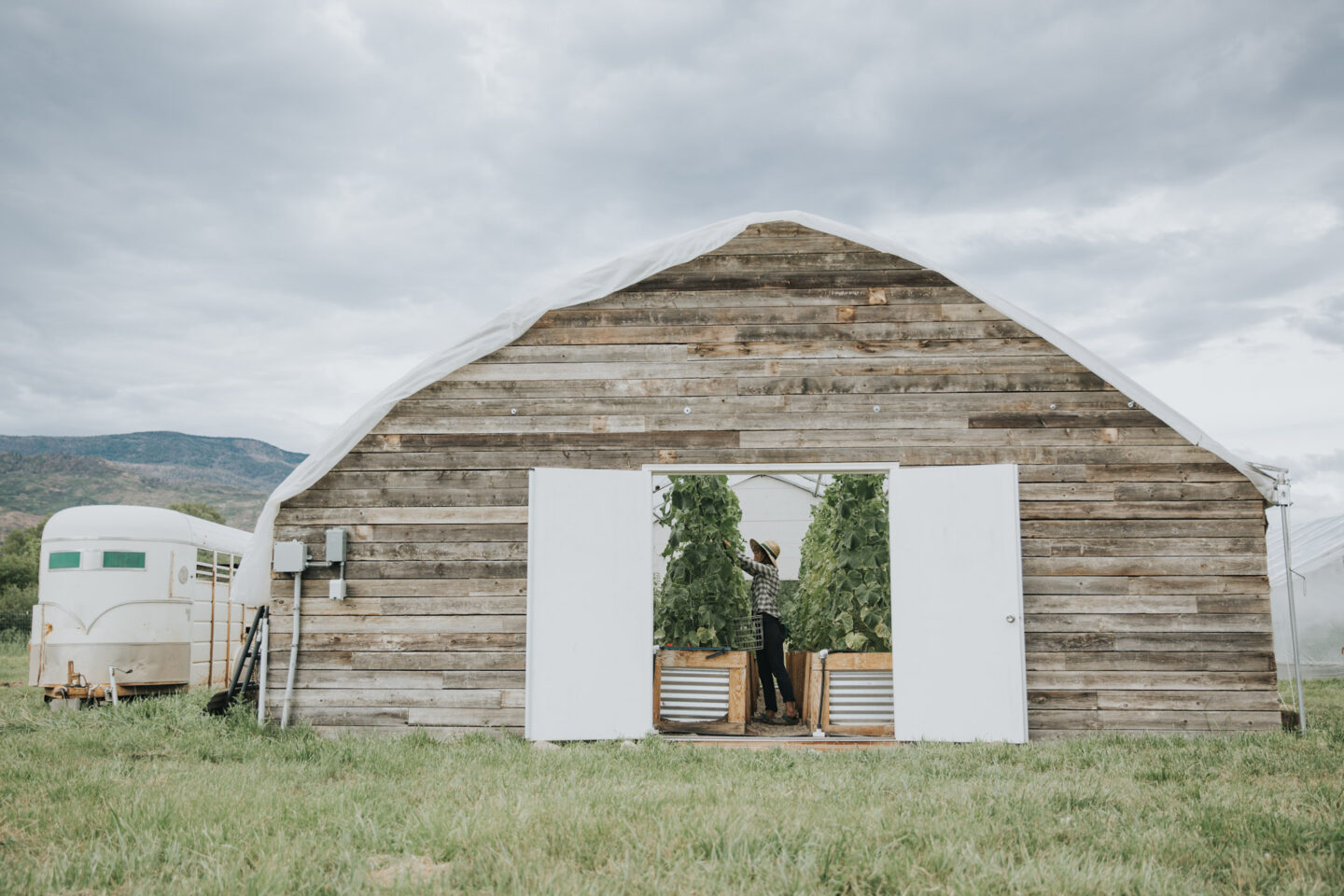
Rock Bottom Ranch is a 113-acre wildlife preserve and working farm in Basalt, between the Roaring Fork River and Mount Sopris. ACES describes it as the mid-valley hub for environmental education, wildlands preservation, and sustainable agriculture. The property includes wetlands, spring-fed ponds, a stretch of the Roaring Fork River, cottonwood bottomlands, teaching farmyards, pastureland, and gardens. It provides winter range for elk and mule deer and nesting habitat for heron, hawk, and owl. Little Ranchers, the spring and fall parent and child series for ages one to four, meets here, as do farm tours, the Rock Bottom Ranch CSA, and the seasonal Agriculture Apprenticeship that trains beginning farmers on the livestock and vegetable crews.
Catto Center at Toklat sits up the Castle Creek Valley at 11247 Castle Creek Road, near the ghost town of Ashcroft. Built in 1948 by Stuart and Isabel Mace as a wilderness lodge, Toklat takes its name from an Inuit word meaning headwaters. Today it hosts the seasonal Toklat Tales talks, guided snowshoe and hiking tours, artist workshops, community gatherings, and a Wilderness Residency program.
Signature Programs
Birding. The ACES Birding Program is led by Rebecca Weiss, a birding guide and naturalist with thirty years of experience in the Aspen area and the author of Birds of Aspen and the Roaring Fork Valley. Outings run year-round, from bi-weekly Tuesday Birding at Hallam Lake and weekly Tuesday Birding at Rock Bottom Ranch to point-to-point Birding by Habitat hikes and a late-winter Rosy-Finch study in Snowmass Village. The ACES Bird Club gives members a year of unlimited Tuesday birding classes plus half-price field outings. ACES and Roaring Fork Audubon also organize the local Christmas Bird Count each winter.
Farm and agriculture education. At Rock Bottom Ranch, ACES models regenerative agriculture production systems that prioritize land stewardship, ecosystem health, carbon sequestration, and animal welfare. The phrase the team uses is land stewards first, farmers second. The ranch runs pasture-based livestock on intensive multi-species rotational grazing and grows more than 50 varieties of vegetables, and the Farmer Training Program publishes that whole method as a free workbook, with sections on everything from moving cattle to pruning tomatoes to running the seed start house. Beginning farmers who want the hands-on version can apply for the Agriculture Apprenticeship, a seasonally recurring training program at the ranch, with hiring starting in mid-November.
Naturalist tours. ACES is a permitted outfitter guide through the White River National Forest, and its naturalist-guided tours are how many visitors first meet the organization. Summer offerings include the Maroon Bells Maroon Lake Walk, the Maroon Bells Crater Lake Hike, the Aspen Mountain Walk, and the Snowmass Ice Age Discovery Hike. In winter, naturalist snowshoe tours leave daily from the top of the Silver Queen Gondola on Aspen Mountain and the Elk Camp Gondola at Snowmass, and the Ashcroft Snowshoe Tour follows Castle Creek to lunch at the Pine Creek Cookhouse. Each June, ACES trains a new cohort of college graduates as Summer Naturalists who go on to connect roughly 41,000 visitors and locals to the area’s ecology over the season.
School programs and camps. Every week, 1,350 students across Aspen, Basalt, Carbondale, and Glenwood Springs receive hands-on environmental science instruction from an ACES Ed educator as part of their school day. ACES places full-time educators in Aspen Elementary, Basalt Elementary, and Crystal River Elementary in Carbondale, with part-time instruction at Sopris Elementary in Glenwood Springs. Lessons connect directly to classroom curriculum and science standards but use the local environment as a living laboratory, and each class leaves the building for two to three ACES field trips a year to dig snow pits on Aspen Mountain, study geology at Maroon Lake, or harvest radishes at Rock Bottom Ranch. ACES must raise the money for this program every year, which is one reason membership and giving matter so much here. ACES Summer Camp runs weeklong sessions for kindergarten through 8th grade at Hallam Lake and Rock Bottom Ranch, with scholarships covering 25 to 100 percent of tuition for full-time valley residents.
Forest health. Through its Forest Programs, ACES has restored more than 1,000 acres using prescribed fire, thinning, noxious weed removal, biochar, and water diversion removal. The Forest Health Index tracks conditions across 38 forested watersheds in Colorado, and the State of the Forest report translates that data for the public.
Civic leadership. The Jessica Catto Dialogues bring environmental leaders to Aspen for more than 1,000 attendees a year; past speakers include Bill McKibben, Terry Tempest Williams, and Carl Safina. The Naturalist Nights winter speaker series, now in its 27th year and co-presented with Wilderness Workshop and Roaring Fork Audubon, is free and open to the public at Hallam Lake and the Third Street Center in Carbondale.
If you are looking for nature education in Aspen or anywhere in the Roaring Fork Valley, the ACES activities calendar is the place to start.
Wilderness Workshop
Where: Carbondale, Roaring Fork Valley
Serves: Community members of all ages; conservation advocacy, volunteer stewardship, guided hikes, lectures
Wilderness Workshop began in 1967 as the Aspen Wilderness Workshop, started by three local women, Joy Caudill, Dottie Fox, and Connie Harvey. Their early campaigns helped protect new wilderness areas across the region and doubled the size of the Maroon Bells-Snowmass Wilderness. Today the organization works to protect the wilderness, water, and wildlife of western Colorado’s public lands, with a focus on the White River National Forest. Its toolkit combines monitoring, research, legal and policy advocacy, and grassroots organizing. Wilderness Workshop is also an ACES partner, co-presenting the free Naturalist Nights winter speaker series. For anyone who wants to move from learning about the landscape to helping defend it, this is a natural next step.
Roaring Fork Audubon
Where: Roaring Fork Valley, with counts and events centered in Carbondale
Serves: Beginning through experienced birders; community science, birding outings, conservation education
Roaring Fork Audubon is the valley’s local Audubon chapter, bringing birders together around outings, education, and citizen science. Its best-known tradition is the annual Christmas Bird Count, which sends volunteers into the field each winter to record every bird they see or hear. ACES runs a count of its own around Aspen, and the data from both feeds the long-running national effort to track how bird populations are changing. Roaring Fork Audubon also co-presents Naturalist Nights with ACES and Wilderness Workshop. Birders at any level are welcome, and the chapter pairs well with the ACES Bird Club for anyone who wants a year-round birding community.
Aspen Snowmass (Aspen Skiing Company)
Where: Aspen and Snowmass Village
Serves: Residents and visitors of all ages; sustainability programs, community grants, on-mountain naturalist programming
Not every environmental education partner is a nonprofit. Aspen Snowmass, operated by Aspen Skiing Company (Skico), has treated environmental responsibility as part of its business for decades. It has published a sustainability report since 1999, and in 1997 it launched the employee-led Environment Foundation, which has granted more than $4 million to sustainability initiatives and nonprofits in the Roaring Fork Valley. Its Give a Flake campaign directs funds toward climate advocacy and environmental groups. The partnership with ACES is easy to see on the mountain. Naturalist snowshoe tours leave daily from the top of the Silver Queen Gondola on Aspen Mountain and the Elk Camp Gondola at Snowmass, and the free ski tour departs from the Wapiti Wildlife Center at Snowmass. For visitors, it is one of the easiest ways to pair a ski trip with a lesson in mountain ecology.
A Statewide Resource: Colorado Alliance for Environmental Education
The Colorado Alliance for Environmental Education is not a program provider in the way the organizations above are. It is a partnership of environmental education providers and supporters working together to advance environmental literacy across the state. CAEE runs professional certification for educators, the Advancing EE Conference each fall, Project Learning Tree, and the eeCorps AmeriCorps program. If your region is not covered by any organization on this list, the CAEE membership directory is the best way to find who is doing this work near you.
Finding Your Place in It
Every organization here is worth your time, your volunteer hours, or your donation, and the honest answer is that Colorado needs all of them. Pick the one whose sites you can actually visit and whose programs match the ages in your household.
If that place is the Roaring Fork Valley, come see us. Walk the loop at Hallam Lake on a weekday morning, book a naturalist-guided hike at the Maroon Bells, or bring the kids to a summer Birds of Prey program. When you are ready to go deeper, an ACES membership starts at $25 for ages 18 to 30 and $50 for a Red-tailed Hawk membership, with priority registration for summer camp, $15 Tuesday morning birding, discounts on classes and events, and the option to join the ACES Bird Club. You can also make a gift to the Children’s Education Fund, which keeps ACES educators in valley classrooms, or direct it toward forest restoration or the next cohort of naturalists.
Fifty-eight years in, we are still educating for environmental responsibility. We would love to do it alongside you.
Looking for ideas you can use today? Read 101 Nature Activities for Kids and Families and 5 Key Benefits of Outdoor Environmental Education for Children on the ACES blog.
Related Content
Wildlife Watching in Aspen: A Fall and Winter Guide Beyond the Birds
Learn More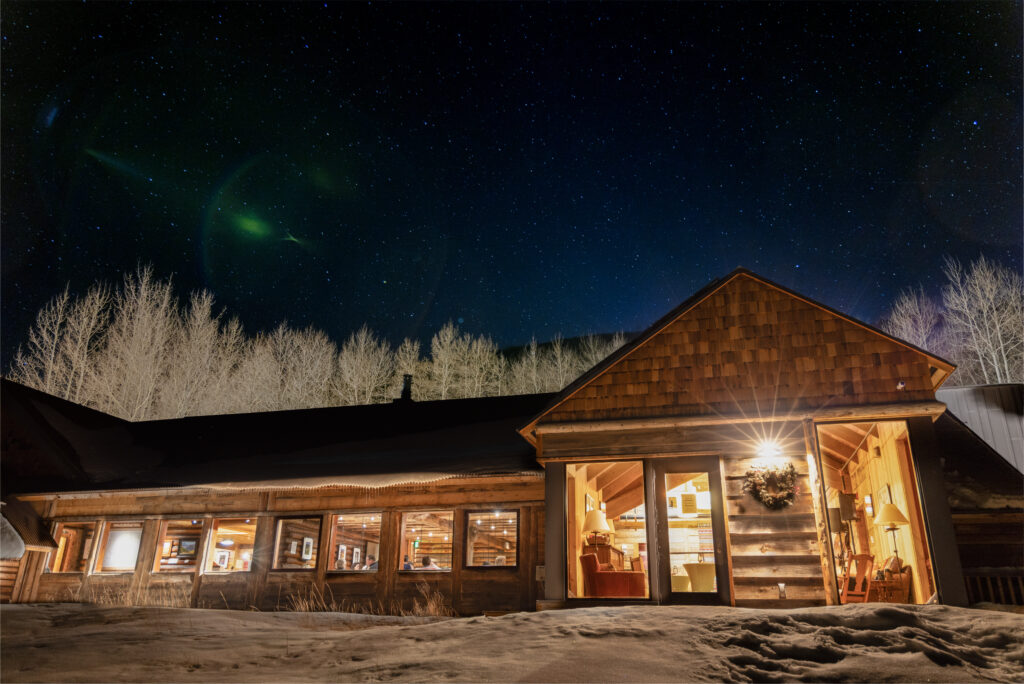
Winter Retreats in Aspen: Gather in the Snowy Castle Creek Valley at Toklat
Learn More