Wildlife and Conservation Biology Programs at ACES: A Guide
ACES Team
October 2, 2026
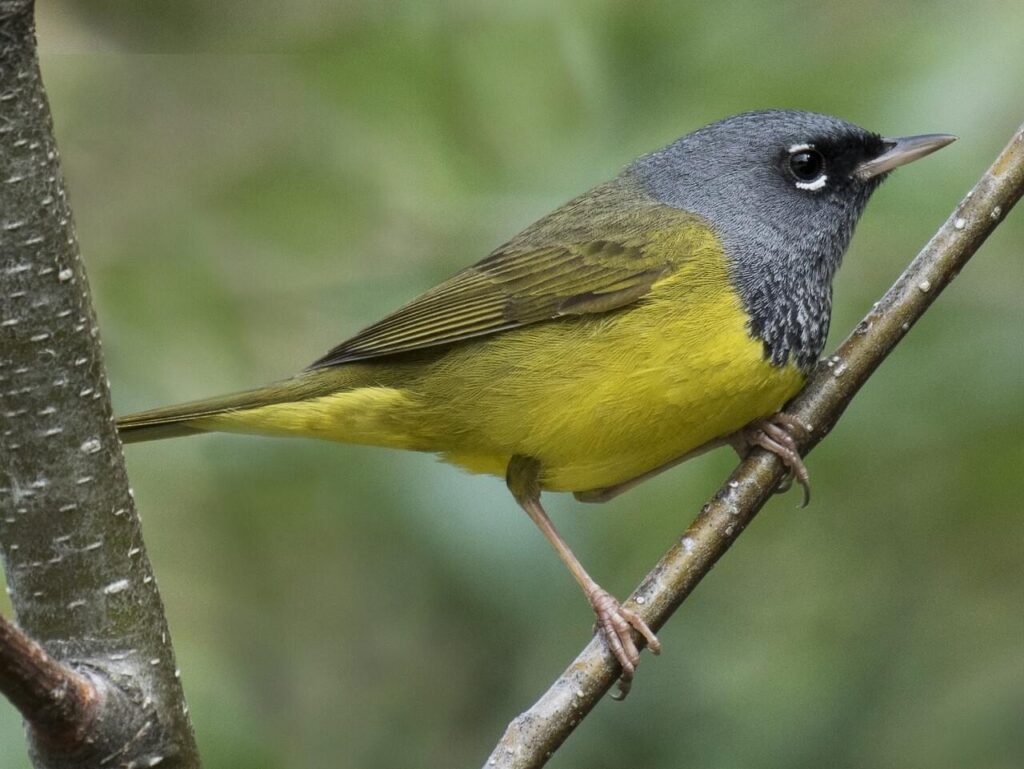
Conservation biology sounds like something that happens in a university lab. At ACES it looks like standing on the Rio Grande Trail at 7:30 in the morning counting Western Tanagers, or digging a snow pit on Aspen Mountain to read the winter’s water story, or spending three nights at a 9,500-foot basecamp learning which plants a beaver dam depends on. The science is the same. The classroom is the Roaring Fork Valley.
This guide collects everything ACES offers for people drawn to wildlife, birds, and field ecology, and organizes it by commitment level: programs you can drop into with a day’s notice, day programs worth planning around, and multi-day courses that go deep. Offerings change with the seasons, so bookmark this page and check the ACES activities calendar for current dates. Most adult programs require advance registration.
Drop In: Outings You Can Join This Week
These are the programs that make Roaring Fork Valley birding accessible to anyone. Most run for a few hours, most cost less than dinner, and beginners are welcome at every one of them.
Morning Birding at Hallam Lake and Rock Bottom Ranch
The backbone of birding programs at ACES is a pair of Tuesday morning outings led by Rebecca Weiss, a birding guide and naturalist with thirty years of experience in the Aspen area, author of Birds of Aspen and the Roaring Fork Valley, who joined ACES as a summer intern in 1993 and now leads the birding program.
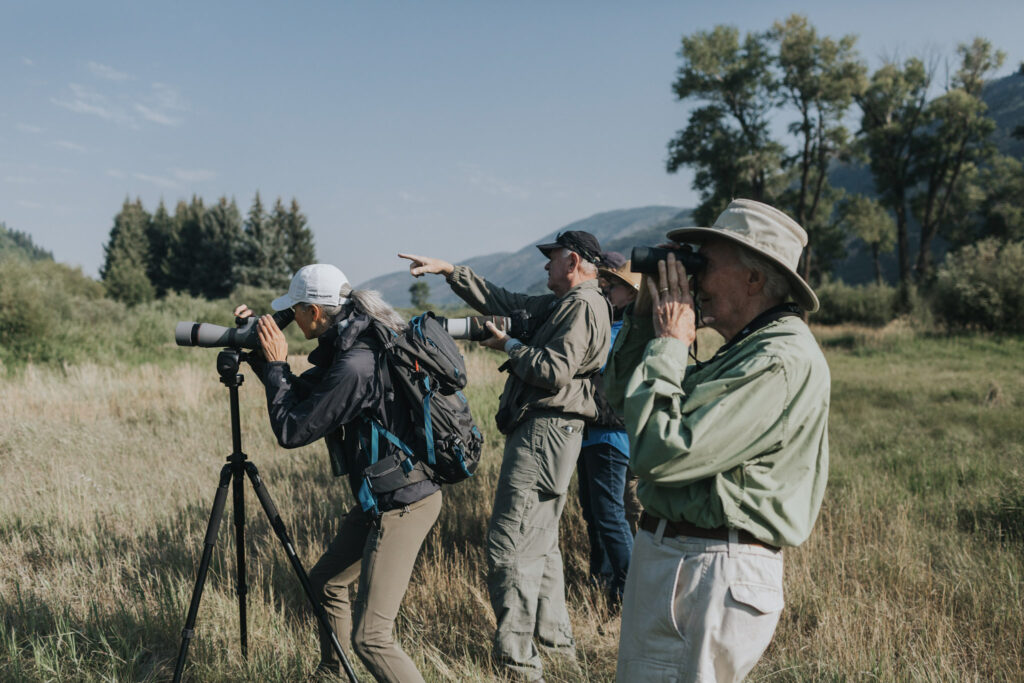
- Tuesday Birding at Hallam Lake meets bi-weekly at 7:30am at the 25-acre Hallam Lake preserve in Aspen. Each outing starts with a brief orientation, then heads into the field to work on bird behavior, identification, and migration. The cost is $25, or $15 for ACES members, and free for ACES Bird Club members. Register by 5pm the day before.
- Tuesday Birding at Rock Bottom Ranch runs weekly at 7:30am on the 113-acre ranch in Basalt, where wetlands, spring-fed ponds, cottonwood bottomlands, and a stretch of the Roaring Fork River pull in a different mix of species than the Aspen sites.
Bring binoculars if you have them. ACES keeps loaner pairs on hand for anyone who does not. If you want to see what a typical morning turns up, the ACES blog posts a trip report after most outings, like this one from Morning Birding at Hallam Lake on August 25, 2026, where the Post Office Trail kept the group busy for the first hour.
Birds of Prey Programs at Hallam Lake
Hallam Lake is home to resident raptors, including a Red-tailed Hawk, a Golden Eagle, and a Great Horned Owl. In summer, ACES Naturalists run a Birds of Prey Demonstration Monday through Saturday at 2pm with flight demonstrations and feedings, framed around the role raptors play as keystone predators. The 2026 season ran from June 14 through September 5. Admission is free for ACES members and $10 per family for non-members, and it is the single easiest way to get a kid within a few feet of an eagle. The free Raptor Fair, held in early July in 2026, adds owl pellet dissection, crafts, and family activity stations to the lineup.
Free Community Birding
Several ACES outings each season are free with registration. Recent examples include Fall Migration on Capitol Creek, which explores a legacy ranch property during peak fall migration, the late-winter Rosy-Finch Study in Snowmass Village, where a private feeder draws in the Brown-capped Rosy-Finch, a species found only in the Southern Rockies, and partnership outings with Pitkin County Open Space and City of Aspen Open Space. Watch the birding calendar; these fill quickly.
Naturalist-Guided Hikes and Snowshoe Tours
If your interest is wildlife more broadly, the naturalist-guided tours are the drop-in option. ACES is a permitted outfitter guide through the White River National Forest, and in summer its naturalists lead daily walks that include the Maroon Bells Maroon Lake Walk, the Maroon Bells Crater Lake Hike, the Aspen Mountain Walk, the Snowmass Wildflower Walk, and the Snowmass Ice Age Discovery Hike. Toklat Tales, a free seasonal series running Wednesday afternoons with Toklat Steward Trevor Washko, carries a new theme each week under the aspens at the Catto Center at Toklat, with walks and hikes through the Castle Creek Valley.
In winter, two-hour naturalist snowshoe tours depart at 10am and 1pm daily from the top of the Silver Queen Gondola on Aspen Mountain and the Elk Camp Gondola at Snowmass, with a focus on wildlife, tracking, and mountain ecology. A free 45-minute ski tour leaves the Wapiti Wildlife Center at Snowmass at 11am and 1pm, where guides point out snowshoe hare tracks along green and blue runs.
Free Winter Talks
The Naturalist Nights speaker series, now in its 27th year and presented with Wilderness Workshop and Roaring Fork Audubon, brings researchers to Hallam Lake on Thursday evenings and the Third Street Center in Carbondale on Wednesdays through the winter. Registration is free. Past talks have covered small mountain owls, bark beetle disturbance in Colorado forests, and using goats for habitat restoration on public land. For a bigger stage, the Jessica Catto Dialogues bring environmental leaders to Aspen, including author Scott Weidensaul on A World on the Wing, his account of global bird migration.
Day Programs: Half a Day to a Full Day in the Field
These programs ask a little more of you, usually a morning or a full day, and give back a lot more depth. They are where birding turns into conservation biology.
Birding by Habitat
The Birding by Habitat series is built on a simple premise: if you learn a habitat, you learn its birds. Each outing is a point-to-point hike through a specific ecosystem. Rock Bottom Ranch to Catherine Store Bridge covers about two miles of the Rio Grande Trail during fall migration. Hunter Creek Fall Sampler works the valley above Aspen, and a Snowmass edition runs in that drainage. Outings run a full morning and have recently been priced at $50, with ACES members receiving 10 percent off and ACES Bird Club members 50 percent off. Special attention goes to orienting beginning birders, so do not let the word habitat scare you off.
Birding and Conversation Outings
The Birding and Conversation series pairs Rebecca Weiss with a second expert to explore compelling topics pertaining to birds, from local history to ecology and conservation. The Basalt Mountain outing is a good example of the format: a moderately strenuous three-mile hike through habitat burned in the 2018 Lake Christine Fire, co-led by ACES Forest Programs Director Adam McCurdy, looking at how post-fire ecosystems support American Three-toed Woodpeckers, Olive-sided Flycatchers, Mountain Bluebirds, and Western Tanagers. A summer edition at Toklat focused on mindful birding and the spirit of that place. ACES also runs a companion Birding and Conservation Series, which in June 2025 took a group to Seven Castles near Basalt with local author and journalist Paul Anderson to watch nesting white-throated swifts and violet-green swallows and talk through the area’s Ute heritage and railroad history; the group logged 24 species that morning. Expect a morning in the field, priced around $50 with the same member and Bird Club discounts.
Mindful Birding and Forest Bathing
Not every wildlife program is about the list. Mindful Birding at Rock Bottom Ranch, led by local therapist and longtime amateur birder Jarid Rollins, is a free evening walk that uses birds and their habitat as a way into a steadier relationship with your own mind and body. The Joy of Forest Bathing with Melanie Choukas-Bradley, a certified nature and forest therapy guide and author of Wild Walking, is a three-hour slow walk through the aspen groves above the Catto Center at Toklat that ends with maple sap tea; the 2026 sessions were $75 with a member discount and scholarships available. ACES also hosts Sound Bath and Forest Bathing sessions at both Toklat and Hallam Lake.
Private Birding Outings and Private Tours
For a family, a visiting group, or a birder chasing a particular species, ACES offers private birding outings tailored to your experience level, lasting from a few hours to a full day, starting at $350 and subject to guide availability. Private naturalist hikes and private snowshoe tours work the same way. Email guide@aspennature.org to set one up.
Multi-Day Courses: Field Ecology and Naturalist Training
This is the deep end, and it is where ACES stands apart from most wildlife conservation programs in Colorado. These courses are small group sizes, taught by working scientists and naturalists, and structured so that adults with no formal training can do real fieldwork.
Land, People, and Place: Field Ecology of the Colorado Rockies
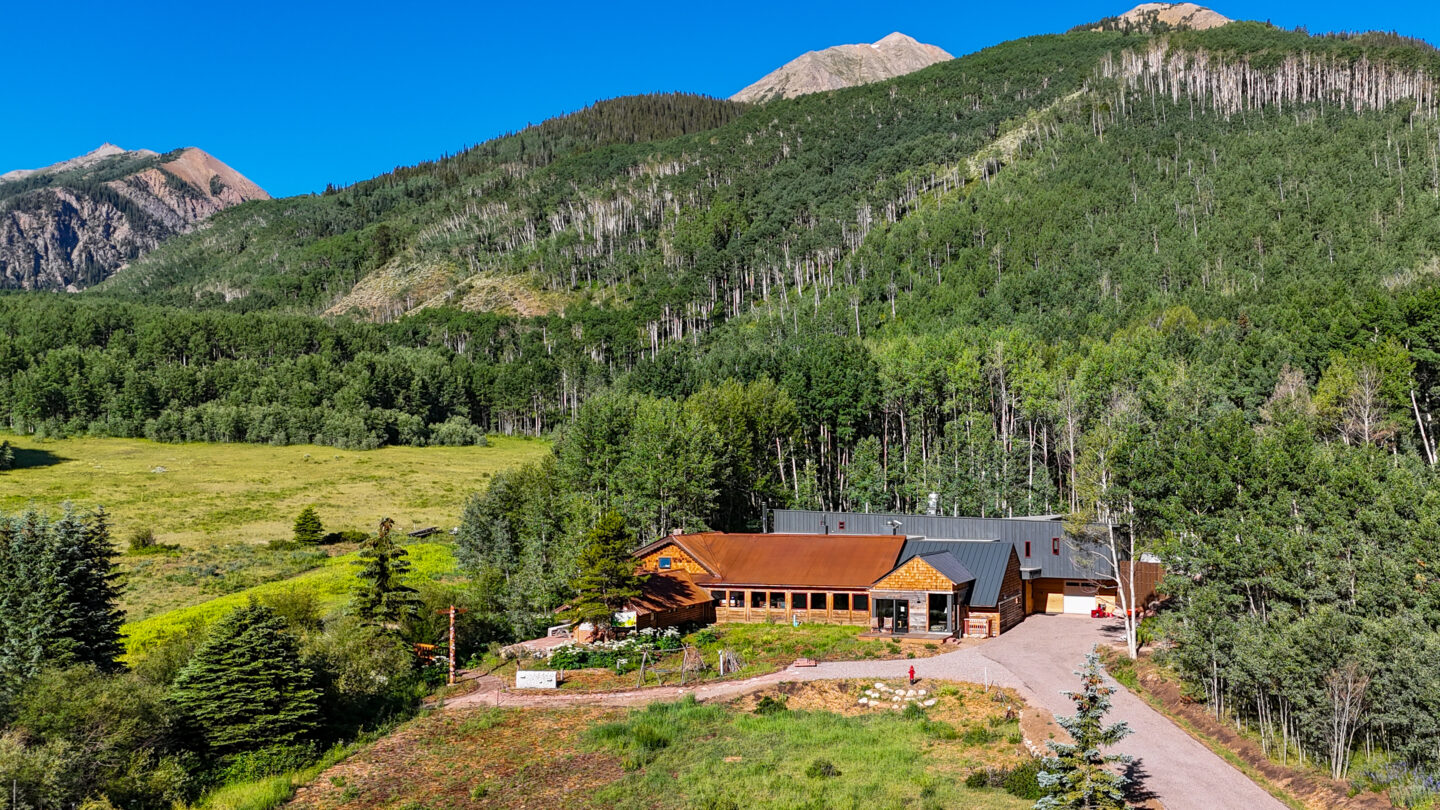
Land, People, and Place is a four-day, three-night field course based at the ACES Riverdance basecamp on Express Creek Road near the Catto Center at Toklat, at 9,500 feet. Led by regional ethnobotanist Kelly Moody, the days are built around nature awareness exercises, readings and group discussions, daily plant walks, beginner and intermediate hikes to high-elevation lakes and beaver dams, lessons on reciprocal foraging of wild foods and medicines, and daily nature journaling. The 2026 session ran July 10 to 13 and cost $600 including meals and camping, with a 10 percent member discount and scholarships available. If you are a career-changer or a student trying to figure out whether field ecology is for you, this is the course to take.
Colorado Mushrooms Workshop
Fungi are wildlife too, or at least they are the part of the ecosystem most people walk past. The two-day Colorado Mushrooms Workshop with Dr. Andrew Wilson, Assistant Curator of the Sam Mitchel Herbarium of Fungi at Denver Botanic Gardens, spends a day and a half collecting in meadows and forests around Hallam Lake and finishes with a public Mushroom Fair. The focus is ecology, natural history, and the general biology of fungi rather than foraging for the table. The 2026 workshop was $200, with a member discount and a $100 educator rate.
ACES Summer Naturalist Program
For college graduates who want to make this a career, the ACES Naturalist Program is a season-long position, June through early September, that begins with two weeks of mandatory staff training. The 2026 posting listed a $590 weekly stipend, shared housing in Aspen, weekly produce from Rock Bottom Ranch, and tuition-free participation in the ACES Naturalist Field School. Naturalists develop a deep knowledge of local ecology, environmental issues, human history, and the physical landscape, then lead daily hikes and connect roughly 41,000 visitors and locals to the Aspen area’s ecology. For more than thirty years, ACES alumni have gone on to work as scientists, teachers, land managers, policy makers, and nonprofit administrators. Applications open in January with a February 15 deadline; details are on the Summer Naturalist job page.
Summer Camps and School Programs for Kids
Young naturalists have their own track. ACES Summer Camp runs weeklong sessions, 9:30am to 3:30pm, for kindergarten through 8th grade at Hallam Lake and Rock Bottom Ranch. Registration opens in mid-February at $475 per week, and scholarships cover 25 to 100 percent of tuition for full-time valley residents. High school students can apply for Educator-in-Training volunteer roles and paid Trook Apprentice positions. During the school year, 1,350 students across Aspen, Basalt, Carbondale, and Glenwood Springs learn science with an ACES educator every week, and each class heads out on two to three ACES field trips a year for winter animal tracking, snowpack analysis, and geology at Maroon Lake.
How to Choose: By Experience and by Age
- Never birded before. Start with Tuesday Birding at Hallam Lake or Rock Bottom Ranch. It is inexpensive, beginners are explicitly welcome, binoculars are provided, and you will leave with a handful of species you can recognize on your own. The ACES birding resources page points to free tools for practicing between outings, including eBird for keeping your lists and a digital library of 602 North American bird songs.
- Intermediate birder. Add Birding by Habitat and a Birding and Conversation outing. Then join the ACES Bird Club. For $250 a year, current ACES members get unlimited Tuesday morning and evening birding classes (a $750 value), 50 percent off Birding by Habitat and other field classes, exclusive birding invitations, and a 10 percent discount with free shipping on binoculars and scopes from The Fat Robin. The Club is also how ACES funds the birding program itself.
- Exploring conservation biology as a path. Take Land, People, and Place. Attend a few Naturalist Nights over the winter. If you are a recent graduate, apply to the Summer Naturalist program.
- Looking for nature immersion rather than science. Forest bathing at Toklat, Mindful Birding at Rock Bottom Ranch, or a Sound Bath session at Hallam Lake.
- Families with young kids. The Birds of Prey Demonstration at Hallam Lake in summer, the Raptor Fair in July, a naturalist snowshoe tour in winter, and the Nature and Me caregiver and toddler class at Hallam Lake or Little Ranchers at Rock Bottom Ranch for the youngest ones.
- Students in grades K through 8. Summer camp, full stop.
- Visiting for a week. A naturalist-guided hike at the Maroon Bells and a Tuesday morning birding outing will show you more of the valley’s wildlife than a week of solo hiking.
Register, and Save with a Membership
Every program above links to its current listing, and registration for most adult programs runs through the ACES registration portal linked from each page. Questions about any of them go to communityprograms@aspennature.org.
Before you register, consider an ACES membership. A Young Environmental Advocate membership is $25 for ages 18 to 30, and a Red-tailed Hawk membership is $50. Both come with $15 Tuesday morning birding, discounts on classes and events, priority registration for summer camps, early access to special activities, and the opportunity to join the ACES Bird Club. Most adult programs in this guide are 10 percent cheaper with a membership, so it pays for itself in a season for anyone who shows up more than a few times.
The valley runs on a calendar, and every season opens a different door. Fall is migration on Capitol Creek and the last warm mornings along the Rio Grande Trail. Winter is tracking on snowshoes off the gondola, Naturalist Nights at Hallam Lake, and rosy-finches at the Snowmass feeders. Summer is the four-day field course at 9,500 feet, mushrooms in the meadows above Hallam Lake, and a slow walk through the aspen groves at Toklat. Whatever season you are reading this in, something is already on the calendar. Pick a program, register, and come learn the valley with us.
Related Content
Patch Birding: Explore Your Local Birding Spot
Learn More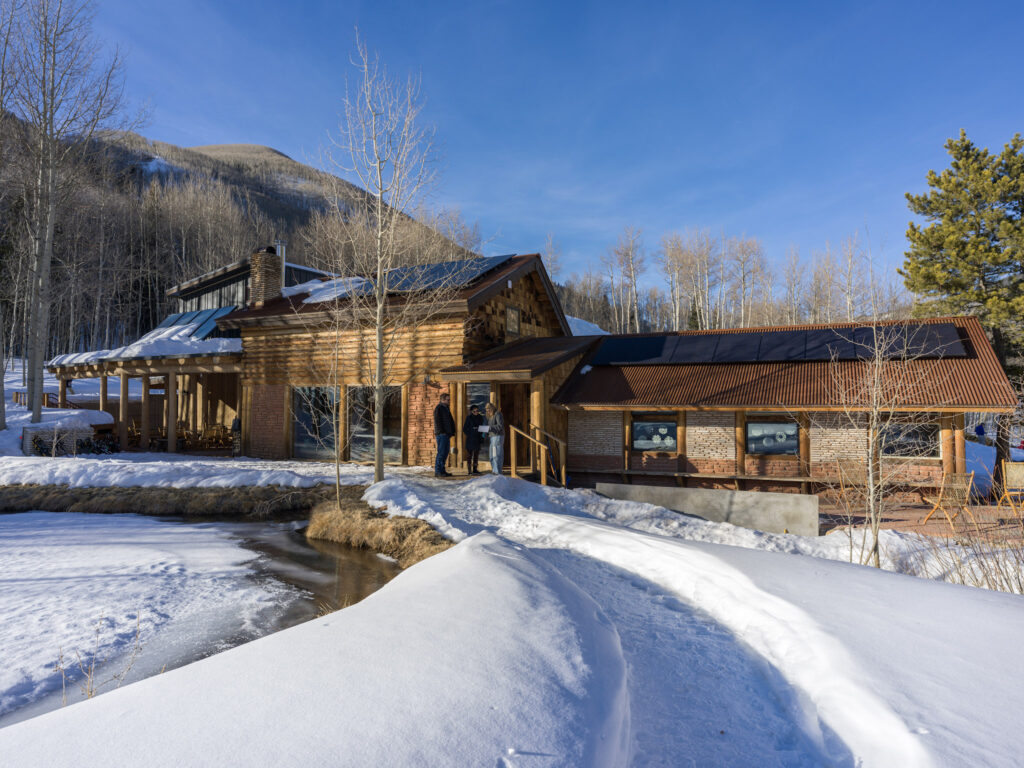
Toklat: A Private Retreat and Tour Destination in Aspen's Castle Creek Valley
Learn More